
Finding budget restaurants in Bangkok becomes easier when diners compare complete meals rather than individual menu prices. A street stall, neighbourhood shophouse and shopping-centre food court can offer different combinations of cost, seating and convenience. Meanwhile, busy tourist streets may have different prices from nearby local dining areas. Travellers, students and families should consider portions, drinks, dietary needs and transport alongside the advertised main-course price. Bangkok offers varied dining formats, but affordability depends on the particular venue and order.
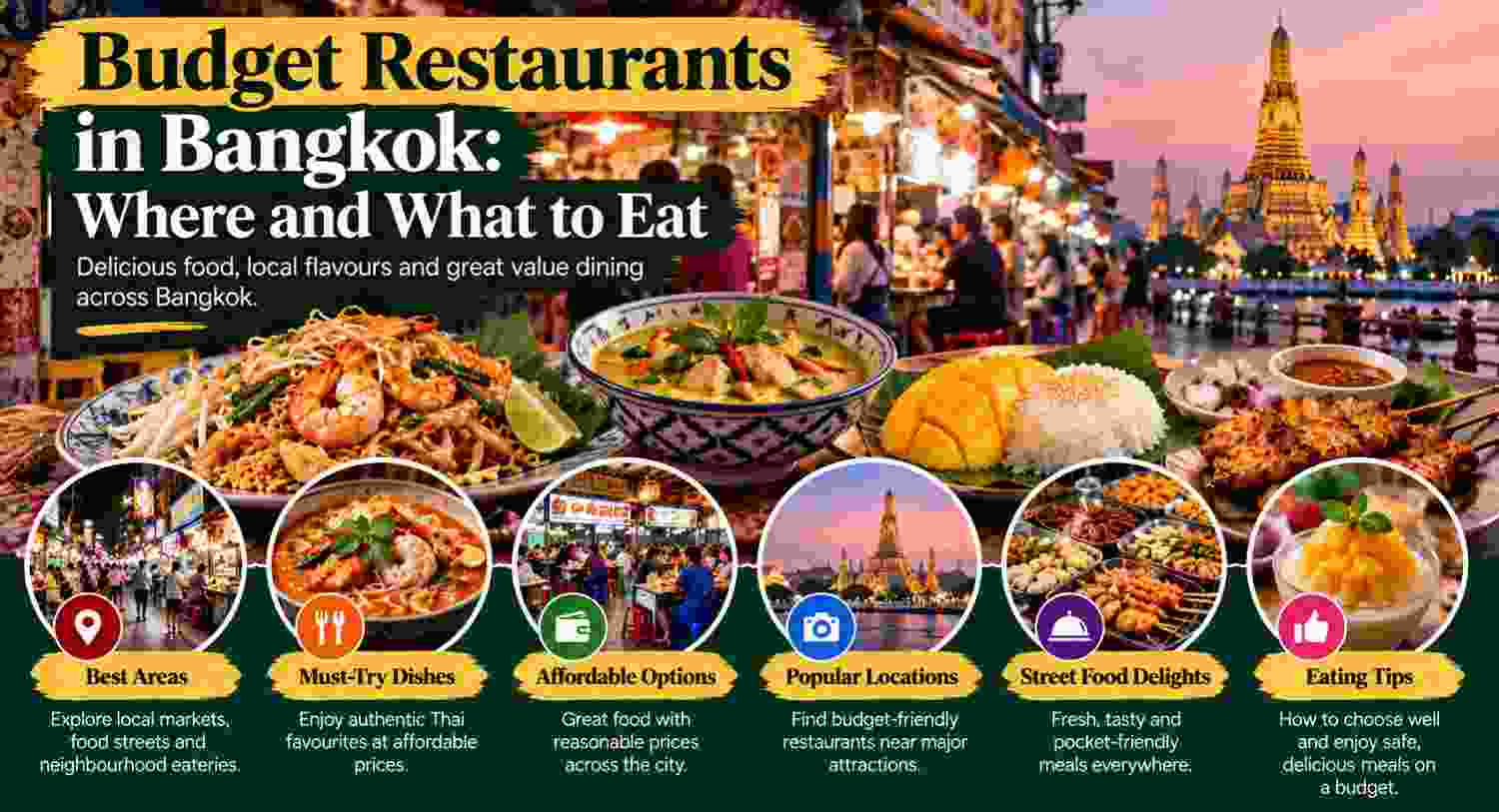
What Makes a Bangkok Meal Budget-Friendly?
The cheapest visible main course does not necessarily produce the lowest final bill. Rice, bread, drinks and additional dishes can change the calculation.
Compare the Complete Order
A rice dish that already contains protein and vegetables may provide a straightforward individual meal. In contrast, curry without rice requires an accompaniment.
Likewise, a low-priced snack may not satisfy someone seeking lunch. Check the portion description before comparing its price with a full plate.
Some restaurants add service charges or applicable taxes to displayed prices. Others include them, so ask about the final amount when information seems unclear.
For perspective, recent Bangkok price checks suggest that simple neighbourhood rice dishes can cost around THB 50–80. Treat this as an indicative range, not a promise.
Furthermore, tourist locations, ingredient upgrades and larger servings can change the figure considerably. Read the displayed menu before committing to an order.
Match Portions to Your Appetite
A sizeable bowl of noodles can serve as a meal, while several small dishes may increase spending without adding much variety.
For groups, shared curries or vegetables may work well. However, individual rice dishes sometimes offer simpler cost control because each person orders a complete plate.
Budget also involves convenience. A higher menu price near accommodation can cost less overall than a cheaper meal requiring extra transport.
Everyday Affordable Dining Formats
Bangkok offers different eating arrangements, and each affects how customers compare prices, seating and food choices.
Street Stalls and Neighbourhood Shophouses
Street vendors often specialise in a narrow selection, such as chicken rice, noodle soup or grilled skewers. Limited menus can make ordering straightforward.
Shophouse eateries operate from small street-facing premises and may offer more seating or cooked-to-order dishes. Yet neither format guarantees consistently low prices.
Check displayed menus, portion sizes and available payment methods before ordering. Therefore, cash can be useful where vendors do not accept international cards.
Food Courts and Local Markets
Bangkok food courts bring multiple vendors together, which helps companions choose different meals while sharing a seating area. Shopping-centre settings may also provide air conditioning.
Payment procedures vary: some venues accept cash at stalls, while others require a prepaid card or another payment system. Check before joining a queue.
If a court uses stored credit, ask how to recover any unused balance. Otherwise, remaining credit can quietly increase the cost of a brief visit.
Markets may combine prepared dishes, snacks and drinks, but stall availability changes with operating schedules and demand. Tourist-oriented markets are not necessarily cheaper.
Thai Dishes Worth Comparing on a Budget
Simple rice and noodle meals often make price comparisons easier because they combine staple ingredients with vegetables, meat or another protein.
Pad Thai: Stir-fried rice noodles commonly combine tamarind seasoning, egg and toppings; seafood or additional ingredients may increase the price.
Khao Man Gai: Poached chicken with fragrant rice, cucumber and dipping sauce often forms a complete individual meal.
Pad Kra Pao: Stir-fried basil with minced meat or another protein typically accompanies rice; a fried egg may cost extra.
Khao Pad: Thai fried rice combines rice, seasonings and chosen ingredients, making its total price dependent on additions.
Noodle Soup: Broth, noodles and selected toppings create a flexible meal, although bowl sizes and protein choices vary.
Khao Moo Daeng: Rice with red barbecued pork usually includes sauce and garnishes; check whether extras come separately.
Som Tam: Green papaya salad supplies a sharp, spicy side, but rice and protein may be needed for a larger meal.
Rice and Curry: A plate with one or more prepared dishes makes it possible to compare combinations before ordering.
Names alone cannot establish dietary suitability. For instance, sauces or pastes may contain fish or shellfish even when vegetables dominate the plate.
Additionally, a fried egg, extra meat or seafood may alter the final price. Clarifying toppings before cooking helps avoid unexpected charges.
Choosing Between Rice, Noodles and Snacks
Rice plates offer predictable individual portions, whereas noodle soups differ in bowl size. Skewers and small snacks require closer attention to quantity.
For a filling lunch, compare one substantial main with the combined cost of several small items. Moreover, a drink can also change the overall total.
Bangkok Neighbourhoods for Affordable Food Searches
Budget dining varies within a single district. A market lane, office street and tourist-facing restaurant may show different prices despite their proximity.
For this reason, compare two or three nearby menus instead of travelling across Bangkok solely because someone describes an entire neighbourhood as cheap.
Phra Nakhon and Banglamphu
Phra Nakhon contains historic attractions, Phahurat and several established commercial streets. Banglamphu includes the well-known Khao San Road visitor area.
Around heavily visited streets, compare posted menus with options in surrounding neighbourhoods. However, do not assume that a quieter lane always guarantees lower prices.
Chinatown and Yaowarat
Chinatown's Yaowarat area features Thai-Chinese dining traditions, shophouse cooking and street food activity. Individual vendors specialise in noodles, rice dishes and snacks.
Busy evening areas can attract substantial visitor demand. Consequently, check the actual price board instead of assuming that every famous food street offers bargains.
Victory Monument, Pratunam and Silom
Victory Monument is associated with transport connections and noodle vendors, including small-bowl boat noodles. Several bowls may be necessary for a full meal.
Pratunam's shopping streets provide opportunities to compare casual eateries and food courts. Meanwhile, Silom combines office-oriented dining with more expensive establishments.
Sukhumvit and Shopping Areas
Sukhumvit stretches across neighbourhoods with varied restaurant formats, from simple meals to elaborate international dining. The same road name tells little about price.
Around major shopping centres, compare food-court menus with surrounding restaurants. A convenient indoor meal may justify a modest difference in cost for some diners.
Street Food Versus Casual Restaurants
A street stall may focus on one carefully defined dish, while a casual restaurant may offer a broader menu and more predictable seating.
Street dining can involve outdoor weather exposure, limited tables and different payment arrangements. Conversely, an indoor venue may charge more for surroundings or service.
Neither format automatically offers better hygiene, flavour or value. Assess visible cleanliness, food handling, displayed prices and your own comfort.
For example, a restaurant might include seating and drinking water while a stall charges for a beverage. Compare what each option actually provides.
For families with children or mobility requirements, seating and accessibility may matter as much as the menu. Confirm arrangements rather than relying on photographs.
Affordable Indian and International Meals
Thai food is not the only option for cost-conscious diners. Indian and other international menus can provide worthwhile choices when portions and accompaniments suit the budget.
Planning an Indian Meal
Dal with rice, chickpea curry, vegetable preparations and roti can form satisfying combinations. Paneer dishes may cost differently because ingredients and preparations vary.
A thali-style meal, where available, may combine several small dishes with bread or rice. Compare its complete price against ordering those components separately.
Conversely, sharing a large curry can make sense for a group only when everyone wants the same dish and the accompaniments remain reasonably priced.
Mama Restaurant operates an Indian cuisine location on Chakkraphet Road in Phra Nakhon. Check its current menu before making any assumption about affordable set meals or prices.
Comparing Other Cuisines
A noodle dish, rice bowl or vegetable-based plate may cost less than a multi-course international meal. However, ingredients, location and portion sizes matter more than cuisine labels.
Vegetarian and Vegan Budget Dining
Vegetarian diners can consider tofu dishes, rice, vegetable curries and suitable noodle preparations. Indian lentil dishes offer another possibility where menus include them.
However, Thai vegetable dishes sometimes contain fish sauce, shrimp paste or egg. Indian breads and curries may contain milk, butter or ghee.
A cheap dish is not useful if it conflicts with dietary requirements. Ask about sauces, cooking fats and shared equipment before ordering.
For food allergies, explain the specific ingredient and cross-contact concern clearly. Never assume a vegetarian label guarantees vegan or allergen-free preparation.
Planning Meals for Different Group Sizes
Solo diners often find individual rice or noodle plates easier to budget. One complete main avoids the uncertainty of multiple separately priced sides.
Families may benefit from shared vegetables, rice and curries, provided the portions suit everyone. Compare shared totals against ordering individual meals.
For children, check spice levels, familiar ingredients and portion expectations. Moreover, confirm seating space and whether the restaurant can accommodate the group.
Groups with mixed diets may prefer food courts because individuals can choose separate cuisines. Still, confirm payment arrangements and available seating.
Lunch, Dinner and Market Timing
Some vendors specialise in breakfast or lunch, while other food markets become busier during evenings. Operating times differ across streets and individual businesses.
Lunch is not automatically cheaper than dinner. The dishes available, location and serving format determine whether one option costs less.
Before travelling for a particular meal, check current opening information. Likewise, allow for queues near popular markets and sightseeing areas.
Extra Charges That Change the Final Bill
An affordable main can become a more expensive order when optional items accumulate. Compare the payable total rather than the first advertised number.
Drinks: Bottled beverages, tea and speciality drinks add costs beyond the food itself.
Accompaniments: Rice, naan, eggs and extra toppings may have separate prices.
Service and tax: Check whether the displayed amount includes applicable charges.
Delivery: Fees, minimum orders and packaging can alter the cost of eating elsewhere.
Transport: A cheaper restaurant may offer little saving if reaching it requires a paid journey.
However, none of these costs applies uniformly. Check the particular restaurant's terms before ordering or booking transport.
Furthermore, delivery applications may display different totals from in-person menus. Review the final checkout figure, including charges, before deciding which ordering method suits your budget.
How to Set a Practical Daily Food Budget
Begin with the amount you can comfortably spend in Thai baht. Divide it among planned meals, drinks and occasional snacks.
Then decide which meal deserves more of the allowance. Someone seeking dinner might choose a simple rice dish at lunchtime.
Separate the food allowance from transport and unexpected purchases, but consider both when selecting a distant restaurant. Otherwise, apparent savings can disappear.
Compare actual menu boards as you move between areas, and keep a little flexibility for changing appetites or unavailable dishes.
Mistakes That Make Budget Dining More Expensive
Ordering a curry without checking whether it includes rice can lead to an unexpected addition. Similarly, snacks may become costly when several are needed.
Another common mistake involves comparing prices without checking portion sizes. A smaller dish may offer poorer value for a hungry customer.
Finally, do not assume all market vendors accept cards or that every online menu reflects current prices. Confirm payment options and availability.
Conclusion
Affordable dining in Bangkok depends on the total meal, not a neighbourhood's reputation or a single menu price. Street stalls, food courts, markets and casual restaurants all deserve consideration. Thai rice and noodle dishes often provide straightforward comparisons, while vegetarian and Indian meals can fit different preferences. Check portion sizes, ingredients, charges and travel costs before choosing. A realistic food budget leaves room for convenience without confusing a low advertised price with genuine value.
FAQs
What kinds of budget restaurants are available in Bangkok?
Bangkok has street stalls, shophouse eateries, local noodle shops, food courts, market vendors and casual restaurants. Each offers different seating, menu and payment arrangements. Compare the full cost of your chosen meal, including accompaniments and drinks, because neither the venue format nor its neighbourhood guarantees the lowest price.
Is street food always cheaper than a casual restaurant?
Not necessarily. A simple street dish may cost less than a restaurant main, but portion sizes and extra ingredients affect the comparison. Tourist-oriented stalls can also charge differently from local vendors. Check the price of a complete meal and consider seating, weather protection and payment convenience before deciding.
Which Bangkok areas are useful for affordable dining?
Consider neighbourhood dining around Phra Nakhon, Victory Monument, Pratunam, Silom and parts of Chinatown. Each area offers different food formats, although prices vary within the same district. Compare menus near your accommodation or planned activities before travelling, since transport costs can cancel out a modest meal saving.
Which Thai meals can suit a limited food budget?
Chicken rice, basil stir-fry over rice, fried rice, noodle soup and prepared rice-and-curry plates are useful dishes to compare. Pad Thai is another familiar option. However, protein choices, extras and portion sizes affect prices. Check whether the dish already contains enough food for your appetite before adding sides.
Can visitors find reasonably priced Indian food in Bangkok?
Yes, depending on the restaurant and order. Dal with rice, chickpea curry, vegetable dishes or a suitable set meal may provide manageable choices. However, naan, drinks and extra curries can increase the bill. Check current menus and portion sizes rather than assuming Indian food costs more or less than Thai food.
Are affordable vegetarian and vegan meals available?
Vegetable rice dishes, tofu preparations, some noodle dishes and Indian lentil meals can be worth considering. Yet Thai sauces may contain fish or shrimp ingredients, while Indian dishes may use dairy. Confirm the full recipe, cooking fat and relevant cross-contact practices, especially when strict dietary restrictions apply.
How can travellers estimate a daily Bangkok food budget?
Set a personal allowance in Thai baht, then allocate amounts for breakfast, lunch, dinner, drinks and snacks. Compare real menu prices in the areas where you plan to eat. Include additional charges and the transport needed to reach restaurants. Leave some flexibility for changes in appetite or availability.
Do budget restaurants in Bangkok add service charges or tax?
Some restaurants display prices that include applicable charges; others may add service or tax separately. Street vendors and food courts can have different arrangements. Read menu notes carefully and ask what the total will be before ordering. Do not assume every establishment uses the same pricing or payment system.
What should families check before choosing a budget restaurant?
Families should compare portion sizes, shared dishes, children's preferences, seating and the complete cost of drinks and sides. Ask about spice levels when necessary. Food courts may suit groups wanting different cuisines, while small eateries can require advance consideration of space. Confirm current arrangements directly with the venue.
How should diners compare overall value between meals?
Compare what the listed price actually includes, how filling the portion may be and whether extra bread, rice or drinks are necessary. Then consider dietary suitability, seating and travel expenses. A slightly dearer complete meal can cost less overall than a cheaper main that requires several additions.